
Product Design · 2023
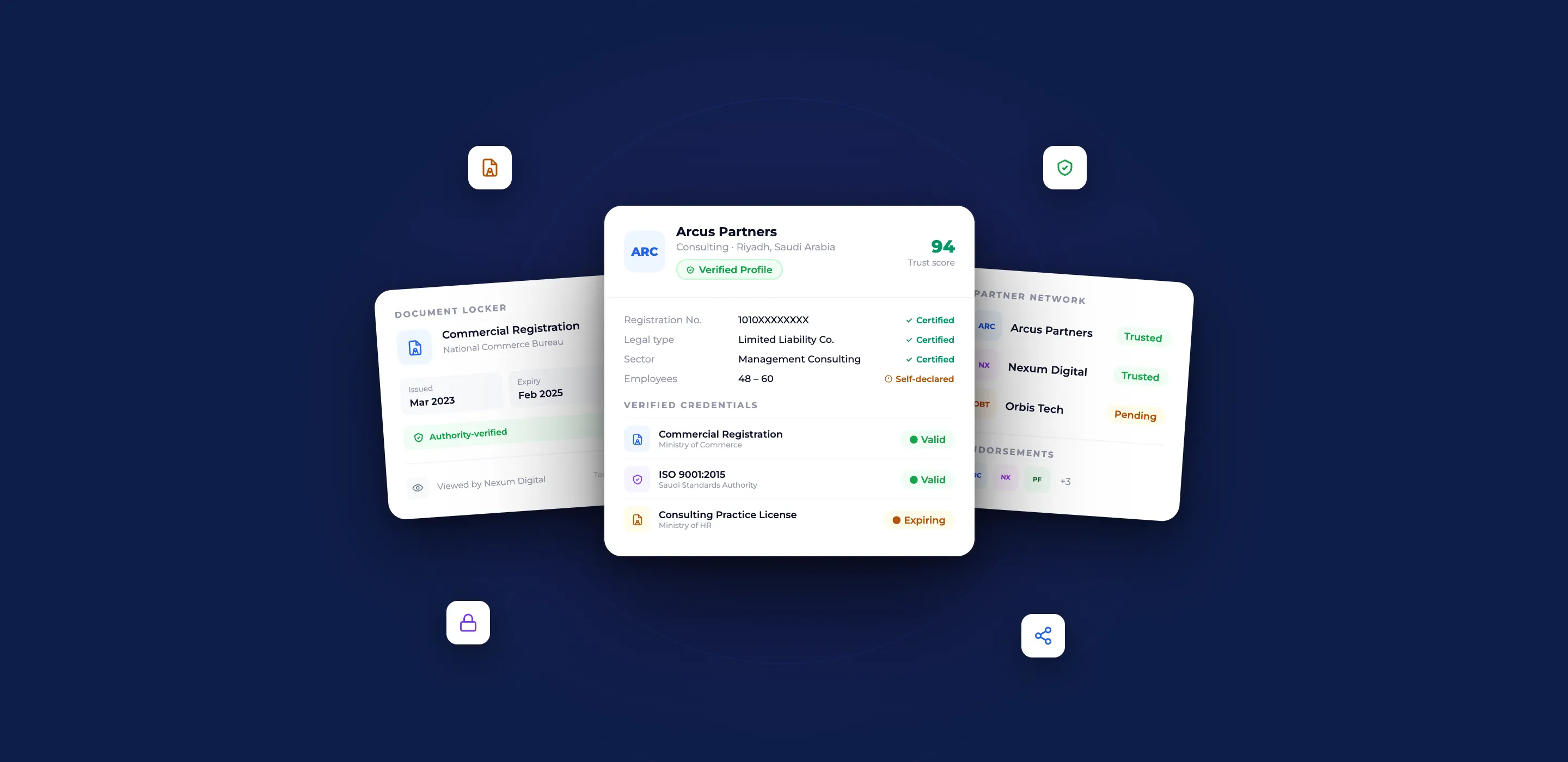
B2B Business Trust Platform
A blockchain-backed certification and networking layer for Saudi Arabia's business ecosystem
The brief started narrow: businesses needed a more secure way to store and share their government-issued certifications. Certificates that expired without warning. Documents re-submitted to every new partner from scratch. Verification that still required physical stamps long after the rest of the deal had gone digital. The ask was basically: build a better digital locker.
We built something closer to an infrastructure layer.
The insight came from the first research immersion. Business owners weren't just annoyed by certificate logistics - they were navigating a trust problem. When they wanted to work with a new partner, a government buyer, or a foreign company, there was no reliable way to say: here's who we are, here's what we're certified for, here's proof you can verify without calling three ministries. The locker was the symptom. The real problem was that trust between businesses had no digital backbone.
What I owned
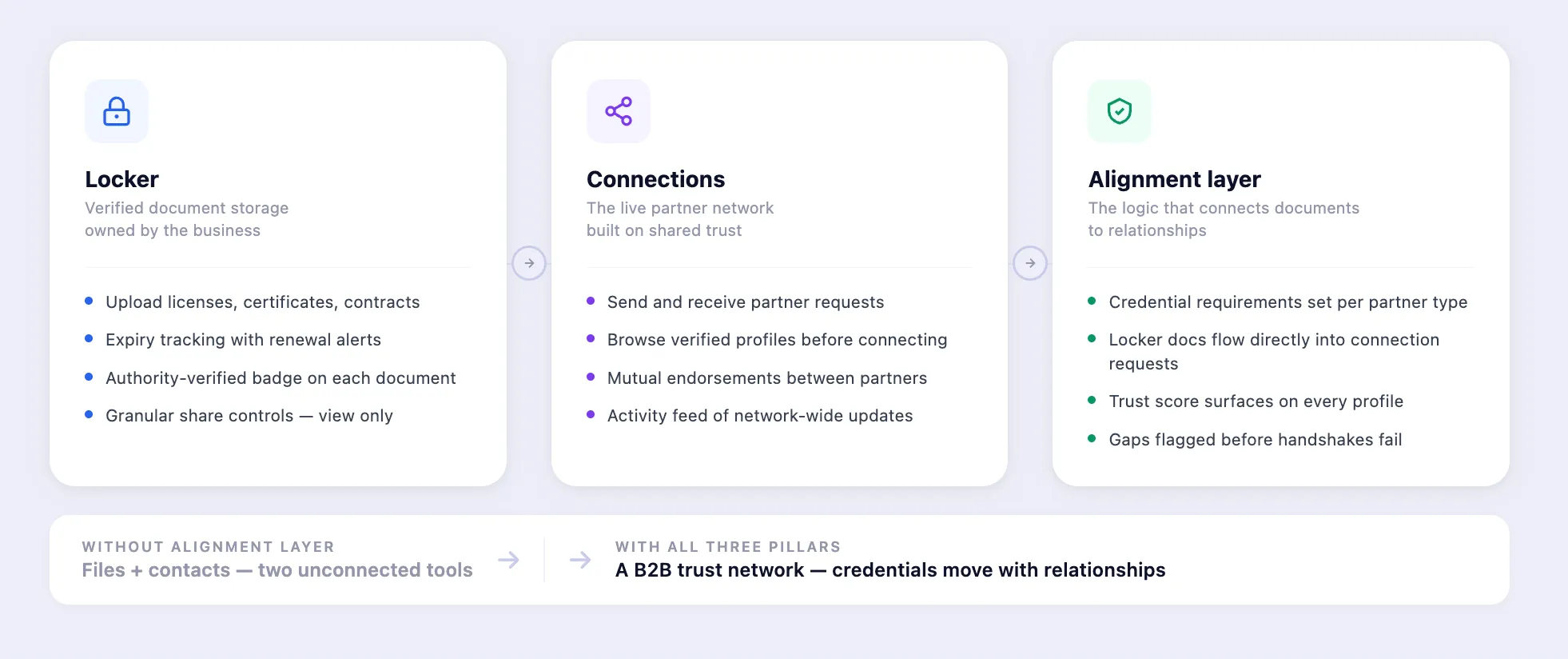
I led the engagement end-to-end across an eight-week sprint: immersion and research, product conceptualization and strategy, interactive prototype, and the final pitch. This wasn't a design assignment inside an existing brief - it ran from raw insight to investor-ready product vision, and the core product calls (what to build, why, and for whom) were mine to make and defend. I owned all three pillars - Locker, Connections, and the Alignment layer - and the platform flows that tied them together.
Start from the locker. Discover the network.
The pivot that defined the product didn't come from a whiteboard - it came from watching how owners described the moment after they'd organized their certifications. The pain wasn't storage. It was what happened when someone asked to see them: the emailed PDF, the “can you send your registration again,” the doubt about whether the version was current.
If businesses were already asking each other for certifications, the real product was the layer that made those requests trusted. The locker was the entry point; the network was the value. I framed three interlocking pillars: Locker (certified document management), Connections (a B2B trust network built on verified identities), and an Alignment layer that benchmarked businesses against the national 2030 economic agenda and surfaced development pathways. That wasn't a design decision - it was a product-strategy call that turned the brief from a government service with a small user benefit into an economic-infrastructure play.
Make blockchain invisible.
Blockchain was the backbone - distributed storage, smart-contract signatures, tamper-proof trails. From a design perspective, it was something most users should never have to think about.
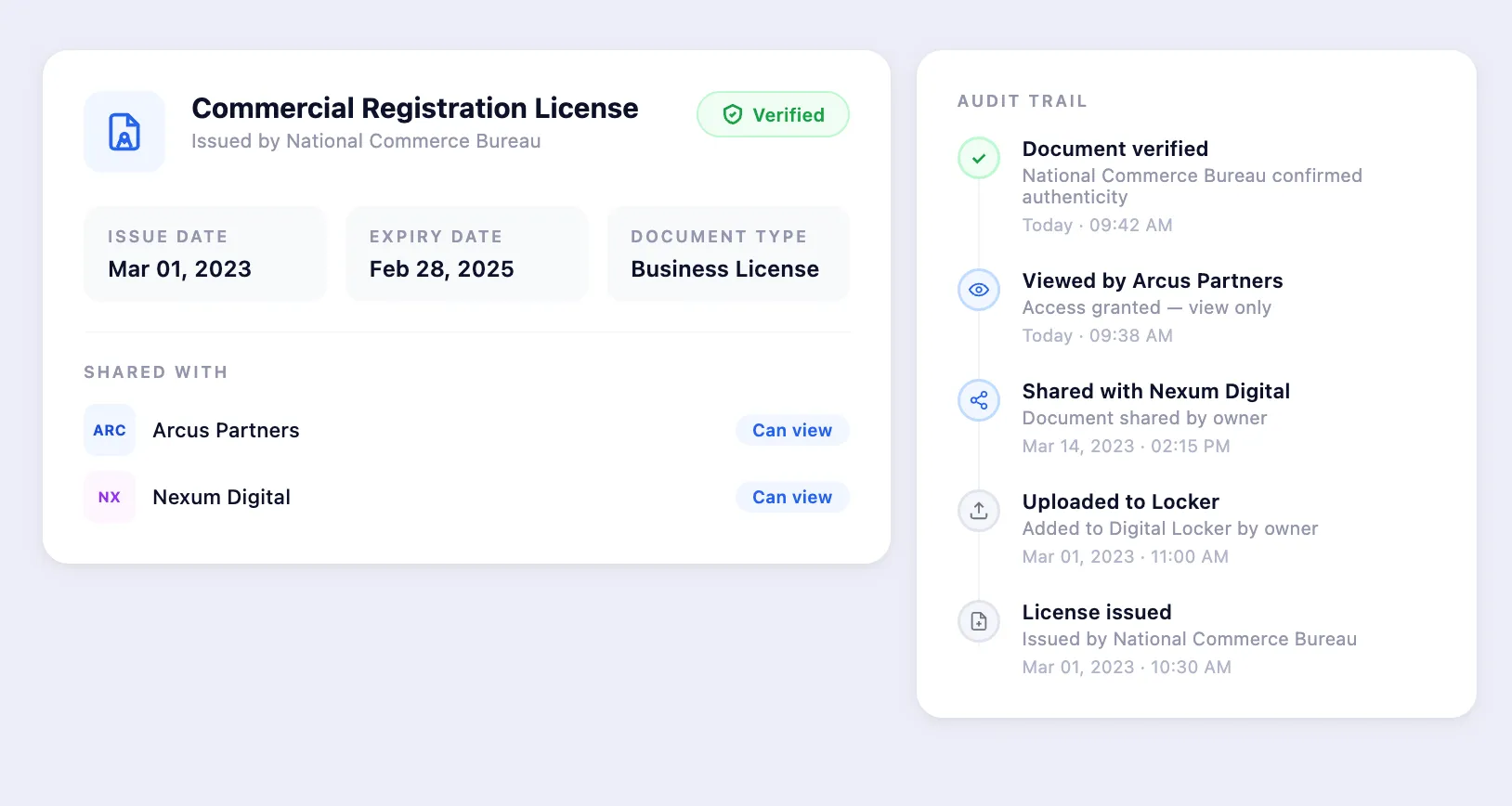
The instinct when pitching a blockchain product to a government client is to lead with the technology. We did the opposite. The product never mentioned blockchain, distributed storage, or smart contracts. It said: this document was last verified 3 days ago, by this authority, and it hasn't changed. That's the promise blockchain makes - stated in the language of trust. I designed a verification-badge system (issued, current, expiring, expired) tied to a readable audit trail. The mechanism was cryptographic; the experience was just a folder that finally felt trustworthy.
Design the connections layer for B2B, not B2C.
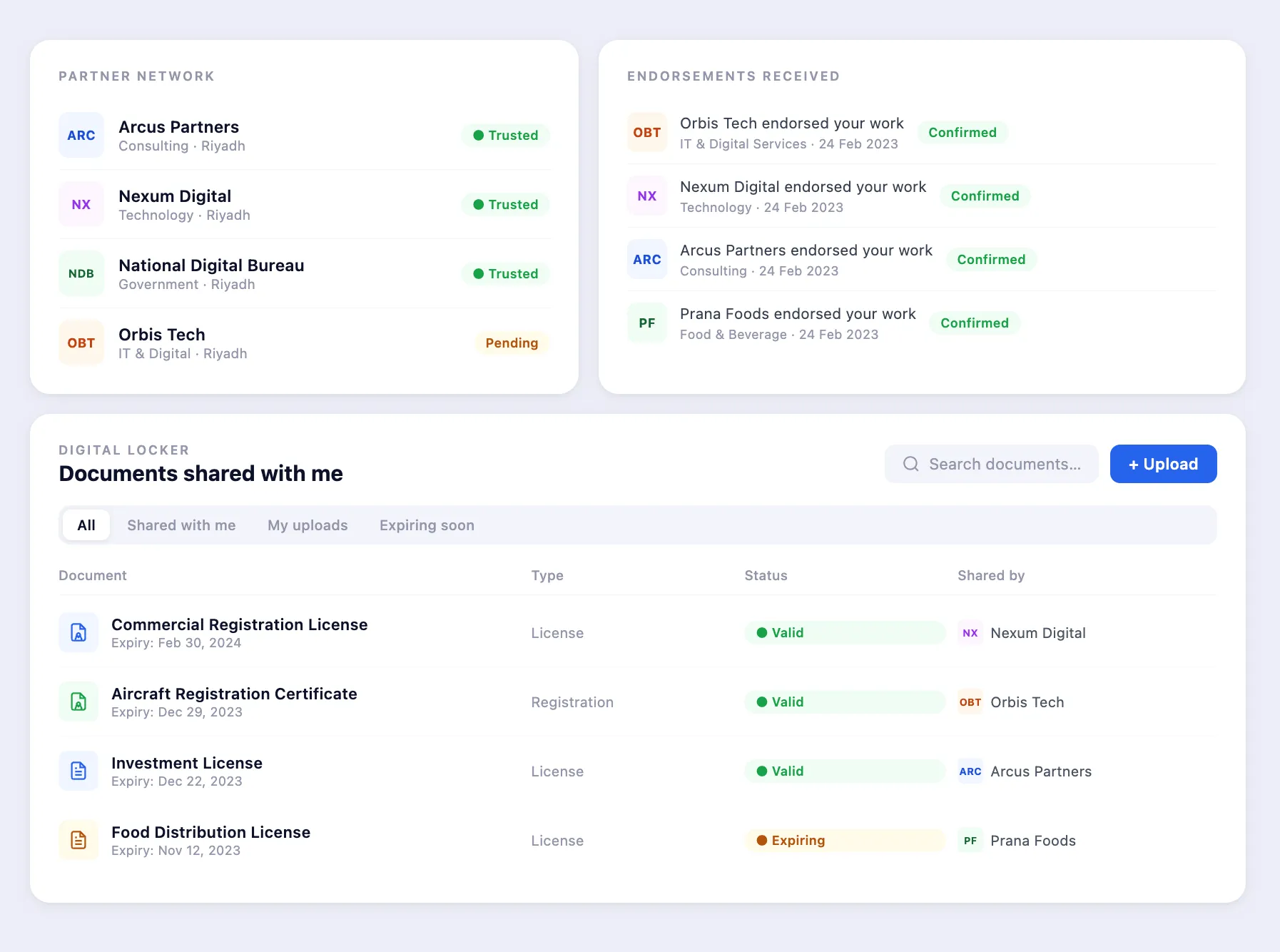
Connections was the most novel problem. The reference point for a professional network is LinkedIn - profile-first, individual, social. But this connected businesses, not people, and the currency of B2B trust isn't endorsements - it's certified identity.
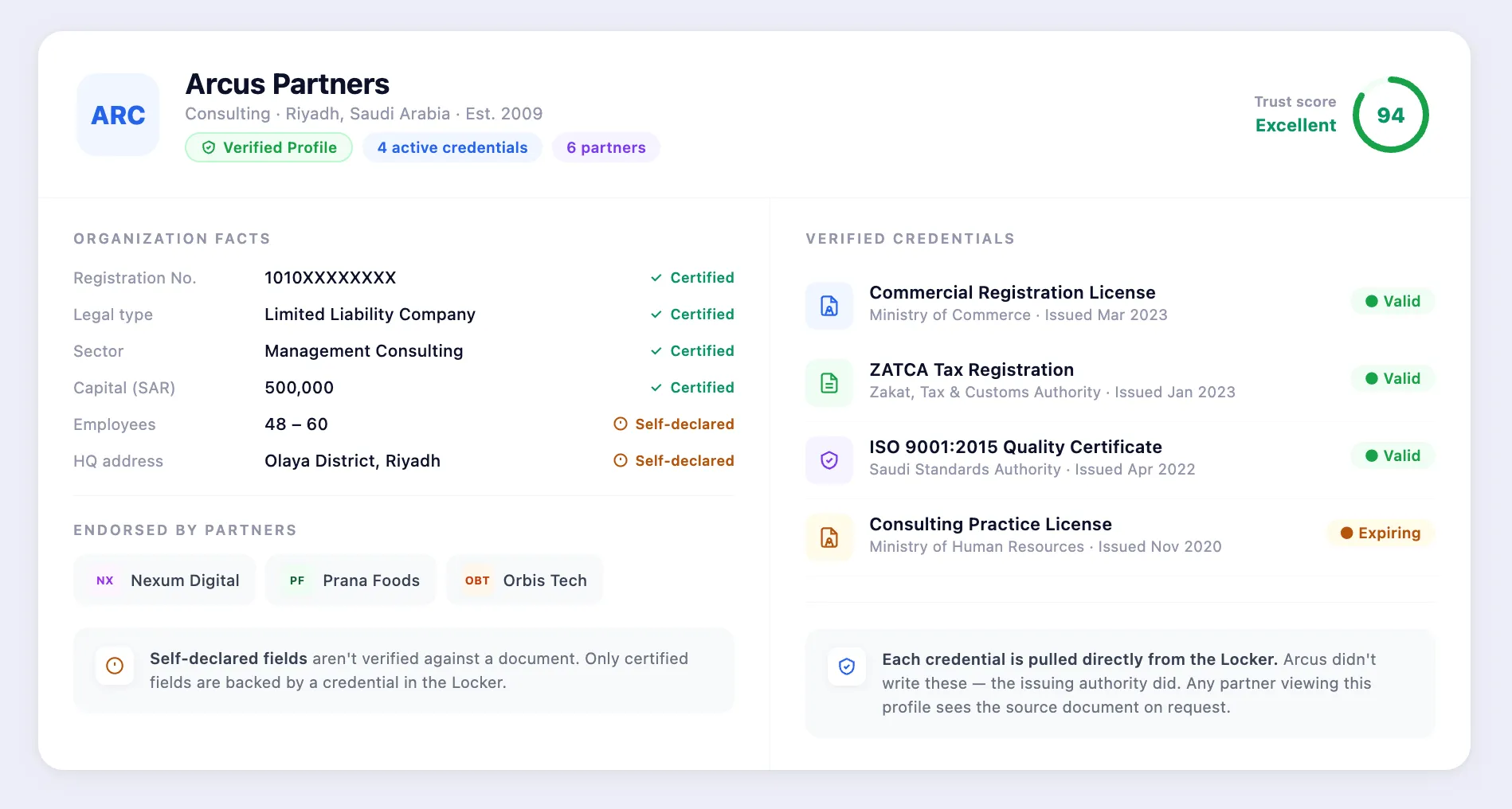
I built Connections around verified organizational profiles assembled from government-issued certifications, not self-declared claims. You couldn't assert you were certified; the certification was either in your verified Locker or it wasn't on your profile. Discovery let businesses filter by certification type, industry, or compliance tier - a company sourcing for a government contract could find certified suppliers without a single phone call. The more businesses verified, the more valuable the search.
How I worked
Eight weeks, four phases: Immersion, Conceptualize, Build, Finalize. Research spanned business owners (the primary persona) plus the certifying authorities, government buyers, and financial institutions on the other side of the trust transaction. The final deliverable was an interactive prototype of the full experience - Locker, Connections, Alignment - with a three-year roadmap and business case, detailed enough to demonstrate the key flows end-to-end to executive stakeholders.
What I'd do differently
I'd spend more time on certifier onboarding. For a trust layer to work, the value has to be real from day one - which means the issuing authorities need to be integrated before businesses arrive. We designed the business-facing flows in depth; the authority-facing integration was specified but not prototyped. The certifier journey is the supply-side constraint the whole network depends on, and it deserved the same depth as the business one.
Full process documentation available on request.
Client names are kept confidential - projects are described by deliverable and region. Happy to walk through the full story on a call.
Request the full case study