
UX & IA · 2023
National Government Portal - KSA
Redesigning the digital front door for a nation of 30M+ citizens
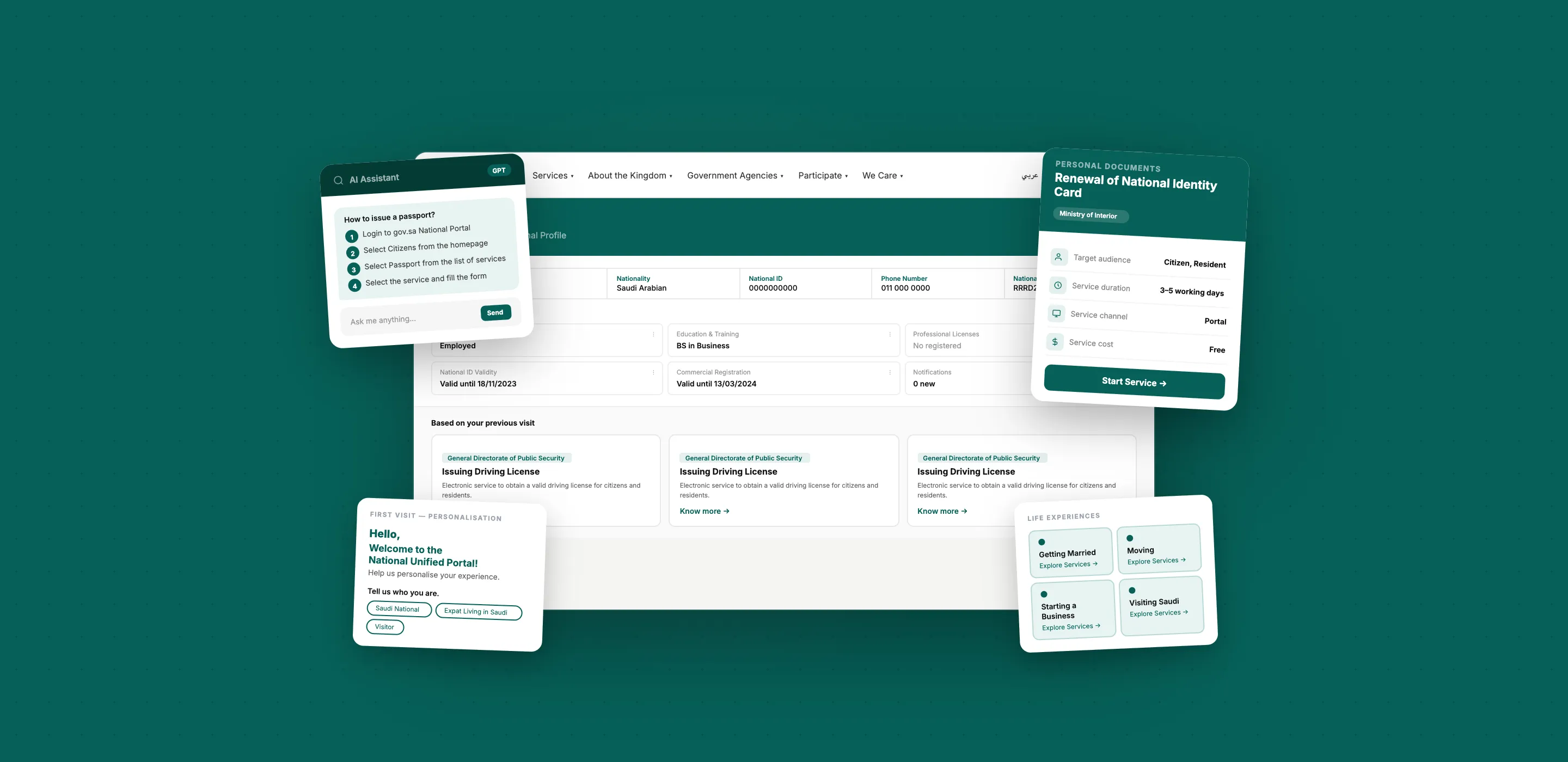
Every government eventually hits the same crisis: it builds dozens of digital services in isolation - each ministry its own portal, its own branding, its own navigation - and then notices that citizens still call the helpline because they can't figure out which website handles their problem. This government noticed. The ask was to turn the national portal into something genuinely worth visiting - not a directory of links, but the digital front door to the Kingdom.
What I owned
I led UX on the redesign: research planning and facilitation, persona development, information architecture, and interaction design through prototype. This wasn't a cosmetic refresh - the brief was ambitious enough that the client literally said “nothing is off-limits,” which in a government project is rarer than it sounds.
Treat the “wow factor” brief as an architecture problem, not a marketing one.
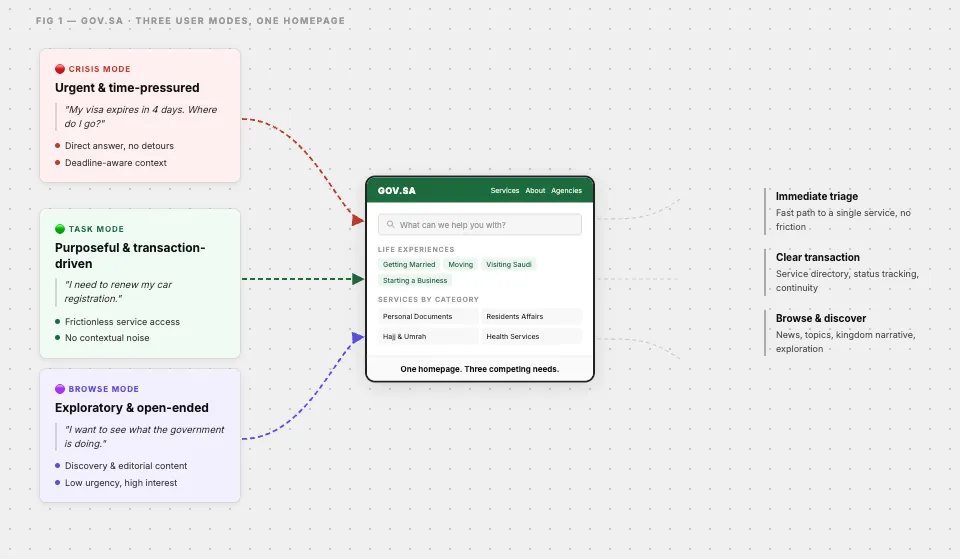
The brief kept returning to one ambition: citizens should visit even when they don't need a service - ideally every digital citizen, once a year. That sounds like engagement marketing, but mapped against real journeys it was structural. Three different user modes were colliding on one homepage: crisis (find urgent info fast), task (complete a transaction), and browse (see what the government is doing).
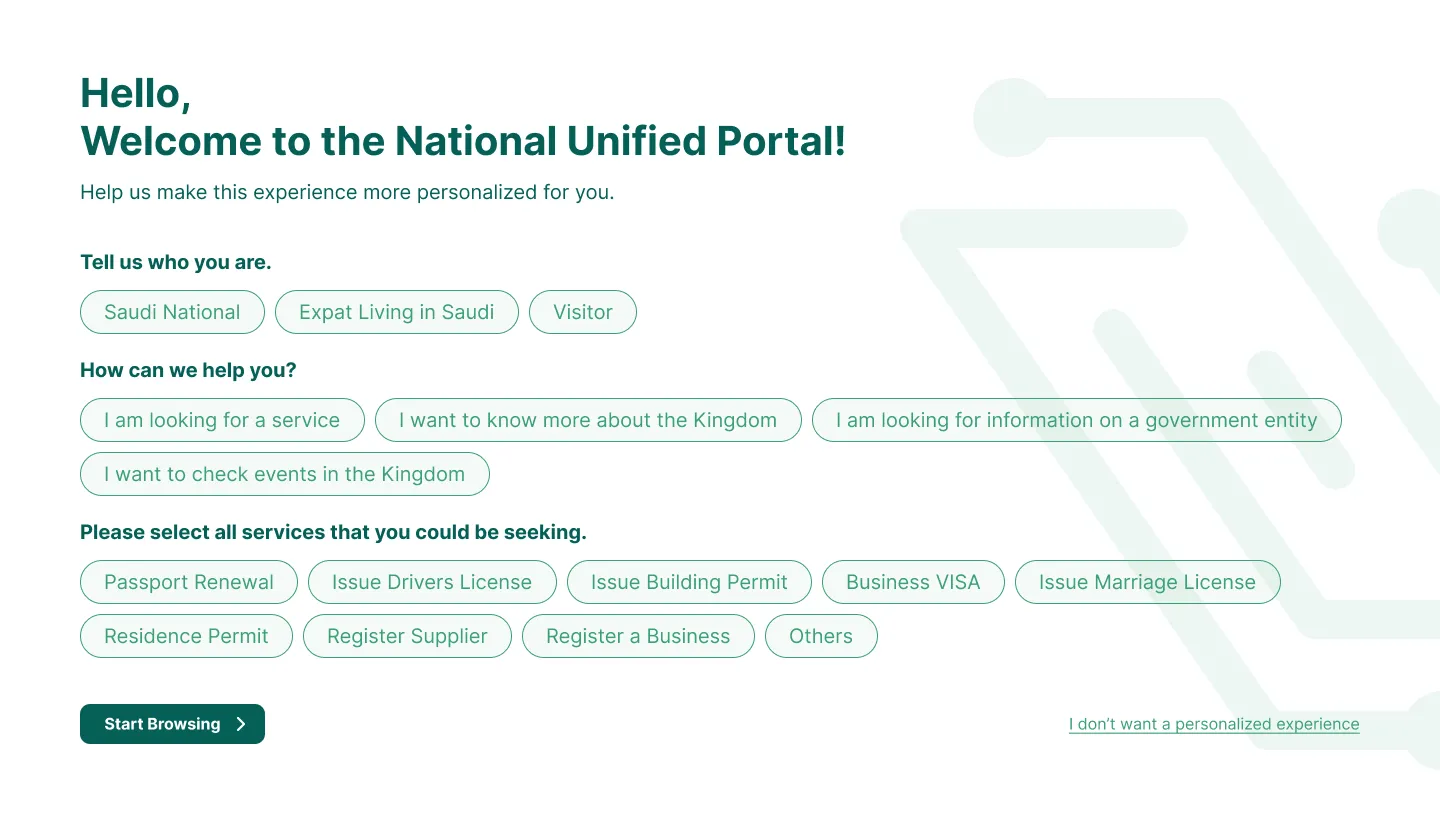
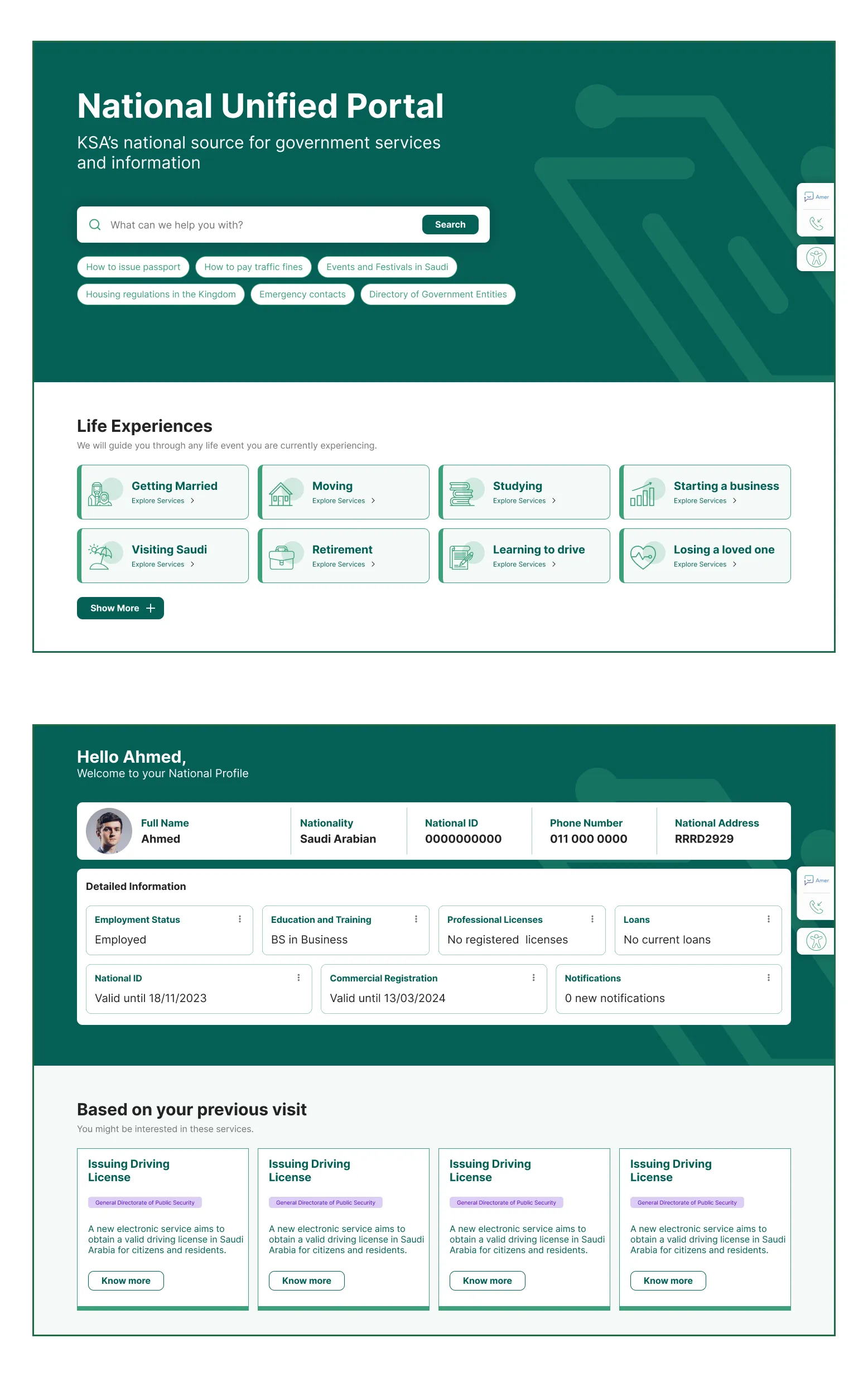
Each needed a different entry path, hierarchy, and content model. Getting that architecture right was the precondition for any wow - you can't make a confusing platform engaging by adding animation. I designed differentiated homepage states for first-time versus returning visitors, personalization hooks that surfaced relevant services, and a structure that separated “Services” from “About the Kingdom” without burying either.
Design for a future merge without waiting for it.
A thorny early question: whether to fold the existing e-participation platform into the portal. E-participation scores feed international e-government rankings the authority cared about - but the two ran on different stacks, with real ownership conflicts. The merge decision hadn't been made.
I designed the IA to accommodate a future merge without requiring one - a modular structure where e-participation lived as a defined zone that could stay a linked external platform or collapse into the main nav once the politics resolved. That unblocked six months of design work on a decision that wasn't ours to make.
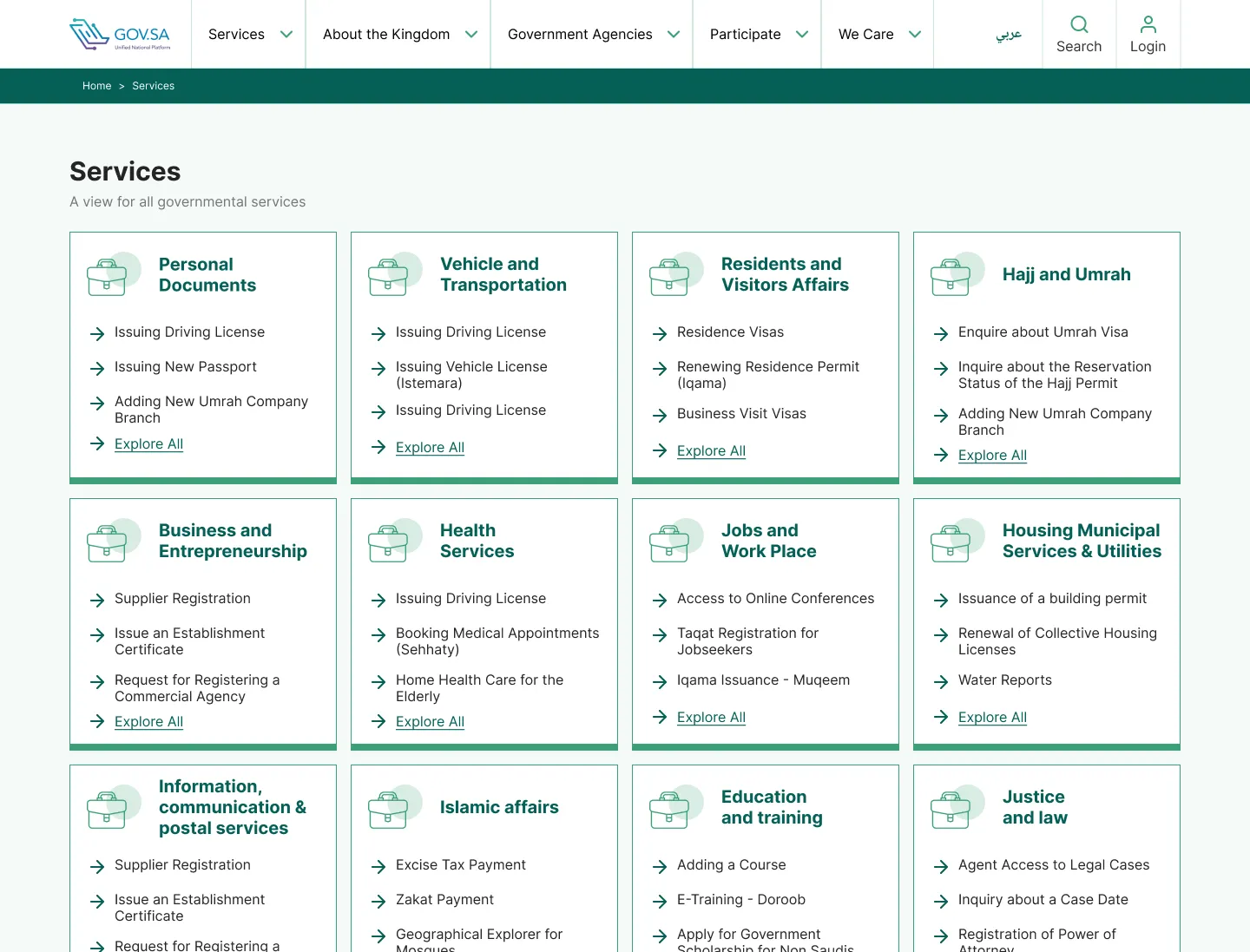
Make the service directory the gravitational center.
I asked what single feature the platform would keep if everything else had to go. The answer was immediate: the service directory. That one answer resolved every hierarchy conflict that came after. News, open data, media center, entity strategies - all useful, none the reason someone opens the portal. I treated the directory as the core gravity and organized every other content type around supporting discoverability rather than competing on the homepage.
How I worked
I ran user interviews across multiple sessions, targeting the 20–65 demographic that made up the dominant user group, and built the current-state assessment first - what the platform offered versus what users expected to find - before touching the future state. The prototype covered homepage personalization, the primary navigation, and the service-access flow. I also flagged a natural-language service-discovery concept to the architecture team - a search layer that understands “I need to renew my car registration” and routes to the right service without the user knowing which ministry owns it. That one didn't make the current build, but the bones are there.
What I'd do differently
I'd fight harder for the conversational search layer. In 2023, recommending LLM-based search in a government portal felt like a stretch; in retrospect it was exactly right. A citizen who doesn't know which ministry owns their problem shouldn't have to figure it out - and the infrastructure was almost there. I'd make that the hill to die on earlier.
Full process documentation available on request.
Client names are kept confidential - projects are described by deliverable and region. Happy to walk through the full story on a call.
Request the full case study